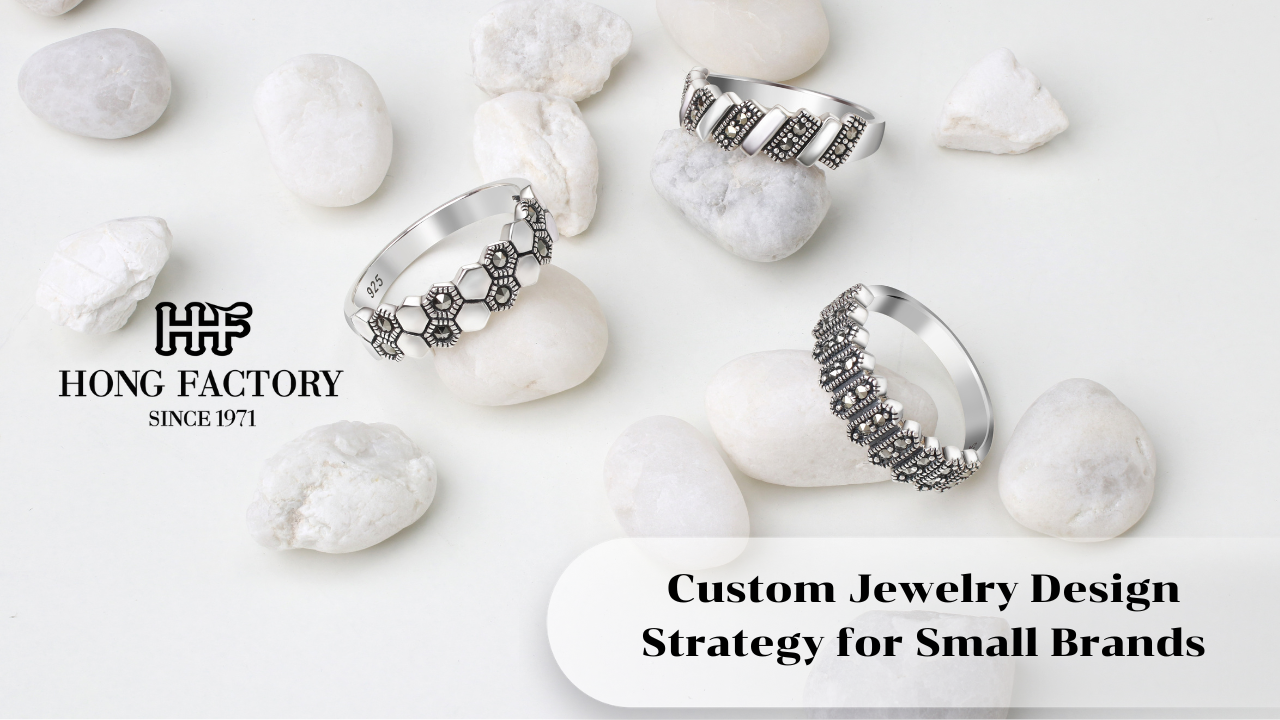
Custom jewelry design offers small brands a powerful way to stand out in a competitive market. Instead of competing on volume or price, customization allows brands to focus on individuality, craftsmanship, and emotional value. For silver and marcasite jewelry brands, a clear custom jewelry design strategy can attract loyal customers, increase perceived value, and support sustainable growth. marcasite
This article explains how small jewelry brands can plan, execute, and scale custom jewelry design effectively—without overwhelming operations or sacrificing profitability.
Why Custom Jewelry Matters for Small Jewelry Brands
Customization creates connection.
Modern consumers increasingly seek jewelry that feels personal and meaningful. Custom designs allow brands to:
- Differentiate from mass-produced competitors
- Build emotional relationships with customers
- Command higher margins through perceived value
- Strengthen brand identity and craftsmanship positioning
For small brands, customization is a strategic advantage.
Understanding What “Custom Jewelry” Really Means
Customization exists on a spectrum.
Types of Custom Jewelry Services
Small brands do not need to offer unlimited customization. Common levels include:
- Semi-custom designs (stone choice, size, engraving)
- Made-to-order variations of existing designs
- Fully bespoke, one-of-a-kind pieces
Choosing the right level is essential for scalability.
Defining Your Custom Jewelry Design Focus
Clarity prevents complexity.
Key Questions to Answer
Before offering custom services, brands should define:
- Which products can be customized
- What elements are flexible and what are fixed
- Who the ideal custom customer is
Clear boundaries protect time and resources.
Designing Custom Jewelry with Marcasite and Silver
Material choice impacts feasibility.
Why Silver and Marcasite Work Well
- Silver is adaptable and easy to modify
- Marcasite offers detail without excessive cost
- Both materials suit personal, meaningful designs
Popular custom options include initials, symbolic motifs, and personalized stone arrangements.
Building a Custom Jewelry Design Process
Structure ensures efficiency.
Step-by-Step Custom Design Workflow
- Customer consultation or request submission
- Design clarification and approval
- Pricing and timeline confirmation
- Production and quality control
- Final delivery and follow-up
A defined process builds trust and reduces errors.
Managing Customer Expectations in Custom Projects
Communication is critical.
Expectation Management Best Practices
- Clearly explain timelines and limitations
- Provide visual references or sketches
- Confirm approvals at each stage
Transparency prevents dissatisfaction.
Pricing Strategy for Custom Jewelry
Custom work must be profitable.
Pricing Considerations
Custom pricing should reflect:
- Design time and revisions
- Material usage
- Production complexity
- Opportunity cost
Avoid underpricing custom services to “win” customers.
Production Planning for Small Custom Jewelry Brands
Customization must fit capacity.
Production Tips
- Limit the number of simultaneous custom orders
- Use standardized components where possible
- Schedule custom work separately from stock production
Controlled production ensures consistent quality.
Quality Control in Custom Jewelry Design
Quality defines reputation.
Quality Assurance Practices
- Double-check measurements and personalization details
- Inspect stone settings and finishes carefully
- Document final approvals before delivery
One mistake in custom work can harm trust.
Custom Jewelry and Brand Storytelling
Customization strengthens narrative.
Custom jewelry allows brands to tell stories about:
- Craftsmanship and attention to detail
- Emotional milestones and personal meaning
- Collaboration between brand and customer
These stories enhance brand value.
Marketing Custom Jewelry Services
Education drives demand.
Effective Marketing Approaches
- Showcase past custom projects (with permission)
- Explain the custom process clearly on your website
- Use testimonials and customer stories
Clear messaging reduces hesitation.
Custom Jewelry for Online vs Offline Sales
Channel strategy matters.
Online Customization
Online tools may include:
- Custom request forms
- Guided option selectors
- Virtual consultations
Offline Customization
In-person consultations allow:
- Direct communication
- Material and size demonstrations
- Faster trust-building
Choose channels aligned with your brand scale.
Custom Jewelry for Wholesale and B2B Clients
Customization can support B2B.
Small brands may offer:
- Retailer-exclusive designs
- Custom branding or labeling
- Limited custom runs for partners
B2B customization builds long-term relationships.
Avoiding Common Custom Jewelry Mistakes
Mistakes reduce scalability.
Mistakes to Avoid
- Offering unlimited customization options
- Failing to document decisions
- Underestimating time and cost
Discipline is essential for success.
Scaling Custom Jewelry Design Over Time
Growth requires structure.
Scaling Strategies
- Start with semi-custom options
- Standardize popular requests
- Gradually expand complexity
Scalable systems protect profitability.
The Long-Term Value of Custom Jewelry for Small Brands
Customization builds loyalty.
Custom jewelry customers are more likely to:
- Repeat purchases
- Recommend the brand
- Accept premium pricing
Customization strengthens brand resilience.
Conclusion
A well-defined custom jewelry design strategy enables small brands to differentiate through personalization, craftsmanship, and emotional value. By setting clear boundaries, structuring processes, pricing fairly, and managing expectations, silver and marcasite jewelry brands can offer custom services without operational overload. In a market driven by individuality and meaning, custom jewelry is not just a product—it is a relationship-building strategy.