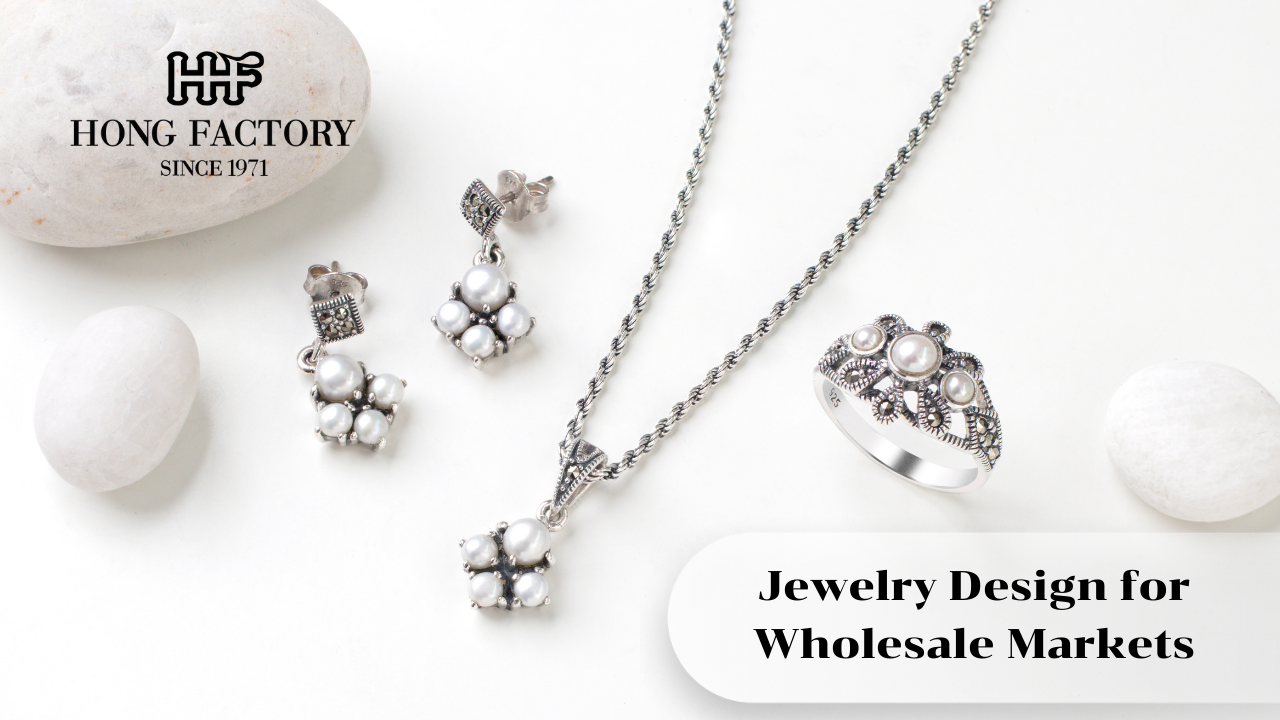
Designing jewelry for wholesale markets requires a different mindset from direct-to-consumer design. Wholesale buyers focus on consistency, scalability, sell-through performance, and brand reliability. For silver and marcasite jewelry brands, a clear jewelry design strategy for wholesale markets helps secure long-term partnerships, repeat orders, and sustainable growth. marcasite
This article explains how jewelry design should be adapted for wholesale success, covering product planning, design consistency, pricing logic, and retailer expectations.
Understanding the Wholesale Jewelry Market
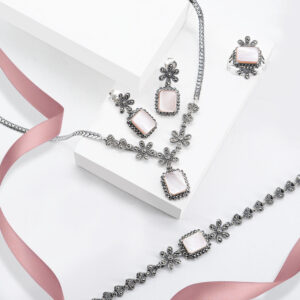
Wholesale buyers think in systems.
Unlike individual consumers, wholesale customers evaluate jewelry based on:
- Sales performance and turnover
- Cohesion within collections
- Ease of merchandising and replenishment
- Risk management and reliability
Design decisions must support retail success, not just aesthetics.
Key Differences Between Wholesale and Retail Design
Design intent changes with channel.
Wholesale Design Priorities
Wholesale-focused jewelry design emphasizes:
- Consistent styles across collections
- Broad customer appeal
- Predictable sizing and wearability
- Stable quality and finishing
Extreme or experimental designs are usually less suitable for wholesale.
Designing Cohesive Wholesale Collections
Collections sell better than single items.
Collection Structure for Wholesale
Effective wholesale collections often include:
- Core bestsellers (rings, studs, pendants)
- Complementary variations in size or detail
- Clear style families and themes
Cohesion helps retailers merchandise and reorder easily.
Choosing Designs with Broad Market Appeal
Wholesale favors versatility.
Designs that perform well in wholesale typically:
- Are easy to style
- Fit multiple age groups
- Avoid overly niche symbolism
Silver and marcasite jewelry naturally support this versatility.
Consistency in Materials and Finishes
Consistency builds buyer confidence.
Wholesale buyers expect:
- Uniform silver tone and finish
- Reliable marcasite quality and setting
- Repeatable production standards
Inconsistency increases perceived risk.
Pricing Logic in Wholesale Jewelry Design
Design must support margins.
Wholesale-Friendly Pricing Considerations
Designers should consider:
- Material efficiency
- Production scalability
- Clear price tiers within collections
Designs should allow retailers sufficient markup without pricing resistance.
Designing for Reorders and Scalability
Reorders drive wholesale profitability.
Reorder-Oriented Design
Wholesale designs should:
- Be reproducible without quality loss
- Avoid excessive hand-only techniques
- Use standardized components where possible
Scalability ensures long-term partnerships.
Using Marcasite Effectively in Wholesale Designs
Marcasite adds value when controlled.
In wholesale collections, marcasite should:
- Be used consistently across styles
- Enhance texture without increasing fragility
- Support a recognizable design language
This reinforces brand identity while controlling cost.
Wholesale Jewelry Categories That Perform Best
Certain categories dominate wholesale.
Common wholesale bestsellers include:
- Stud earrings and small hoops
- Pendant necklaces
- Stackable or classic rings
- Simple bracelets and bangles
These designs suit diverse retail environments.
Packaging and Presentation for Wholesale Buyers
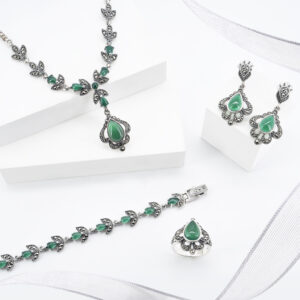
Packaging supports retail efficiency.
Wholesale-friendly packaging:
- Protects jewelry during transport
- Aligns with brand positioning
- Is easy for retailers to display or repackage
Excessive packaging can increase costs unnecessarily.
Designing for Global Wholesale Markets
Global reach requires adaptability.
Designers should consider:
- Cultural neutrality in motifs
- Universal sizing standards
- Consistent quality expectations
Silver and marcasite designs translate well across regions.
Wholesale Jewelry and Trend Sensitivity
Trends must be handled carefully.
Wholesale collections benefit from:
- Trend influence applied subtly
- Timeless foundations with modern touches
- Avoiding short-lived fashion risks
Stability is valued over novelty.
Supporting Wholesale Sales Through Design Documentation
Clarity increases buyer confidence.
Design-related documentation may include:
- Clear product specifications
- Consistent naming and style codes
- Visual guides for collections
Professional presentation strengthens trust.
Avoiding Common Wholesale Design Mistakes
Mistakes reduce buyer confidence.
Mistakes to Avoid
- Overcomplicated designs
- Inconsistent finishes
- Designs that are difficult to reproduce
Wholesale success depends on reliability.
Measuring Design Performance in Wholesale
Data informs improvement.
Brands should track:
- Bestseller performance
- Reorder frequency
- Retailer feedback
Design evolution should be data-driven.
Long-Term Benefits of Wholesale-Oriented Jewelry Design
Wholesale-focused design supports scale.
Brands that design effectively for wholesale:
- Build stable revenue streams
- Develop long-term retail partnerships
- Reduce operational volatility
Design becomes a strategic asset.
Conclusion
Jewelry design for wholesale markets requires balance between aesthetics, scalability, and commercial logic. By focusing on cohesive collections, consistent materials, broad appeal, and reorder-friendly production, silver and marcasite jewelry brands can succeed in wholesale environments. When design aligns with retailer needs and end-customer preferences, wholesale partnerships become sustainable engines of long-term growth.